01
Beyond “Computility”:
Power Supply Testing Challenges and Architectural Evolution amid the High Growth of AI Servers
Driven by the surge in AI-related computing demand, AI servers are increasingly highlighted as core infrastructure. In 2024, the global AI server power supply market has shown significant growth. Technologically, AI server power supplies are continuously evolving towards higher power density, higher precision, faster dynamic response, higher efficiency, and better stability. However, their testing still faces several severe challenges: for instance, the accuracy requirements for current and voltage place higher demands on the accuracy and consistency of test equipment; dynamic load response testing is complex, requiring the simulation of extreme conditions to verify power supply adaptability; furthermore, diverse application scenarios and rapidly iterating customer needs also require test systems to be highly flexible and scalable.
02
The “Power Test Codex” Safeguarding AI Computility
[1] Core Test Standards and Mandatory Test Items for AI Server Power Supplies
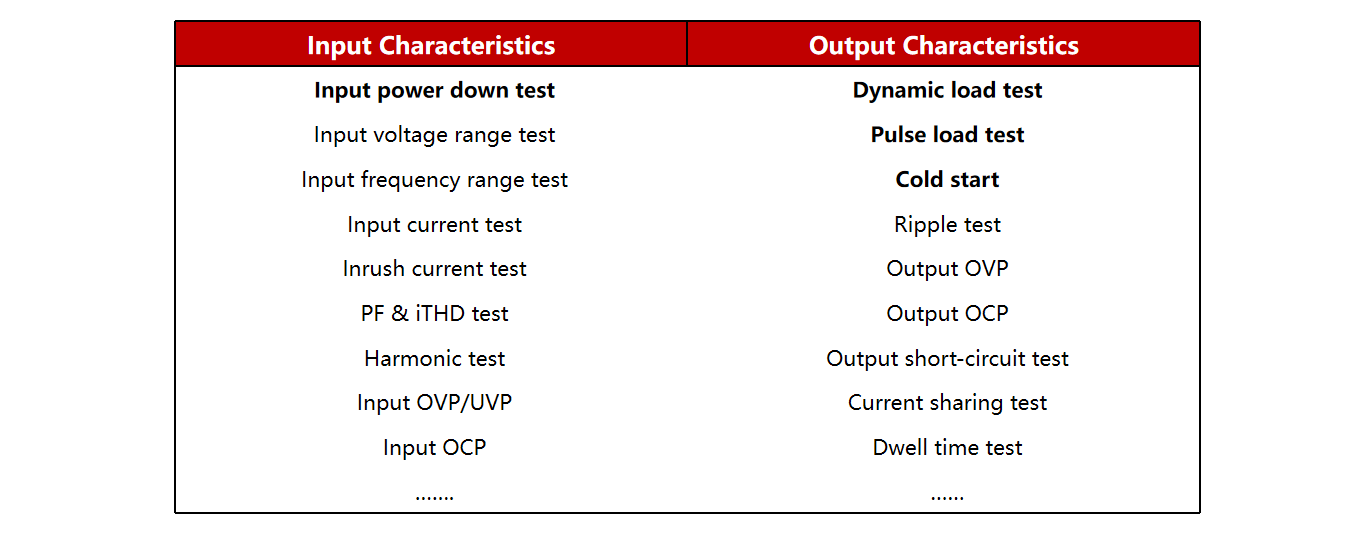
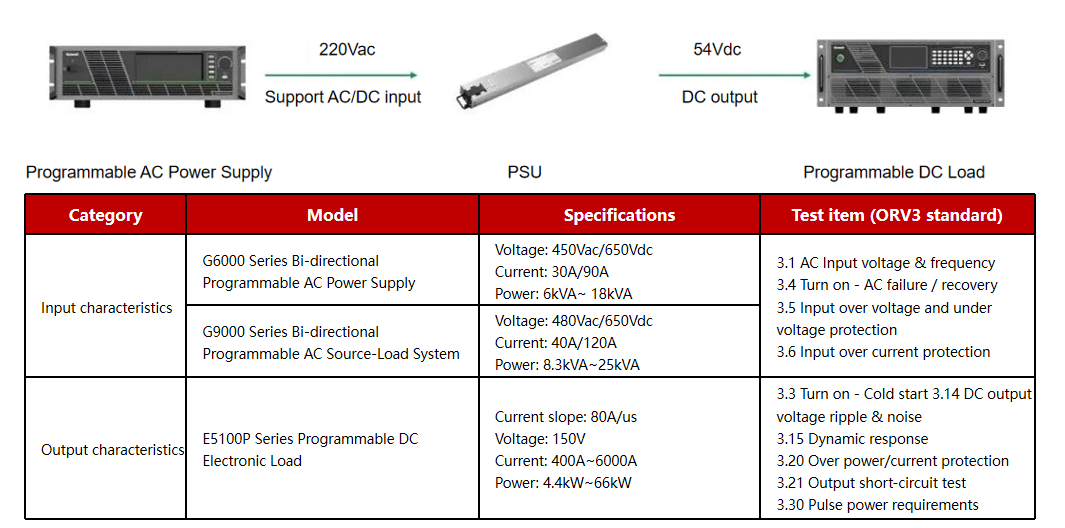
The test standards for AI server power supplies have a well-established system, primarily covering core standards such as ORV3, M-CRPS, ITIC, T/UNP 498, T/UNP 539, 80Plus, ATX, and SSI. These standards define the test requirements for AI server power supplies across multiple dimensions, including compatibility, reliability, electrical performance, communications, environmental, thermal properties, mechanical design, safety regulations, and EMC. The core test items for electrical characteristics are as follows:
[2] Standard Interpretation(Open Rack V3 48V PSU Specification)
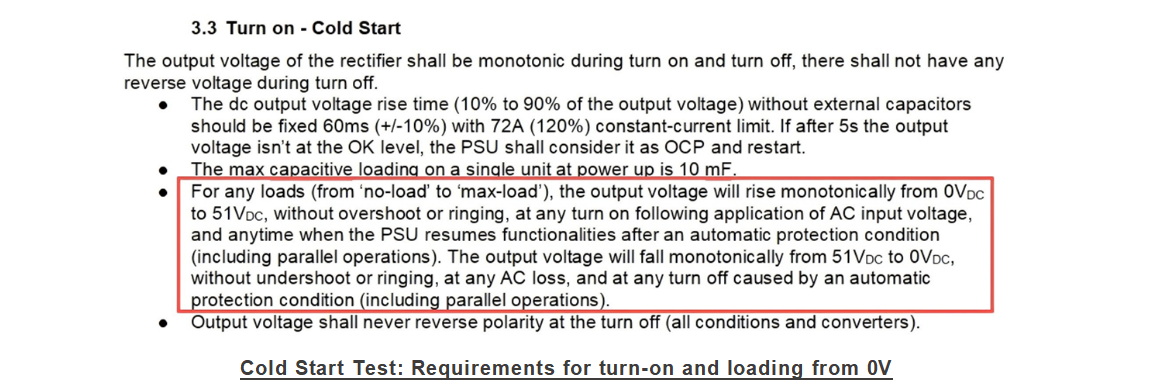
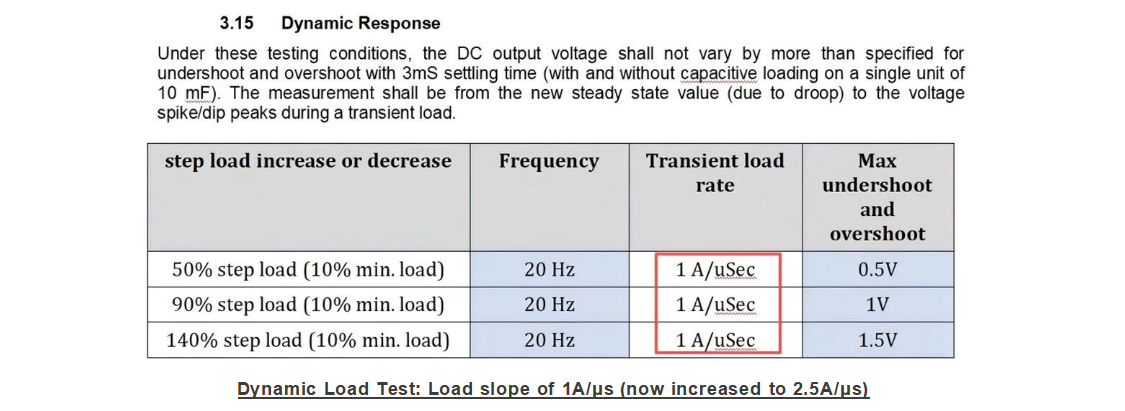
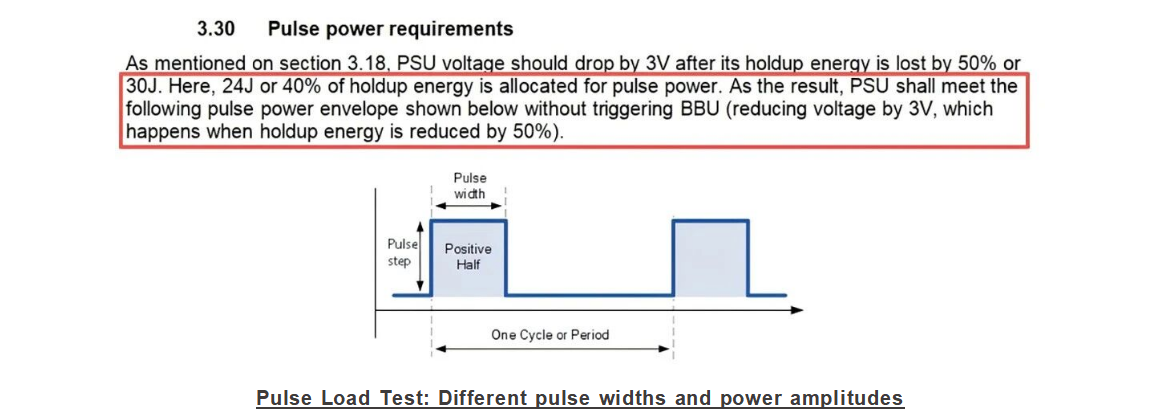
As evident from the standards, server power supply testing requirements are characterized by wide range, high dynamics, and high precision.
03
Fortifying the Foundation of AI Computing:
A Detailed Explanation of Kewell's Next-Generation Server Power Supply Test Solution
04
Real-World Test Items and Data Sharing
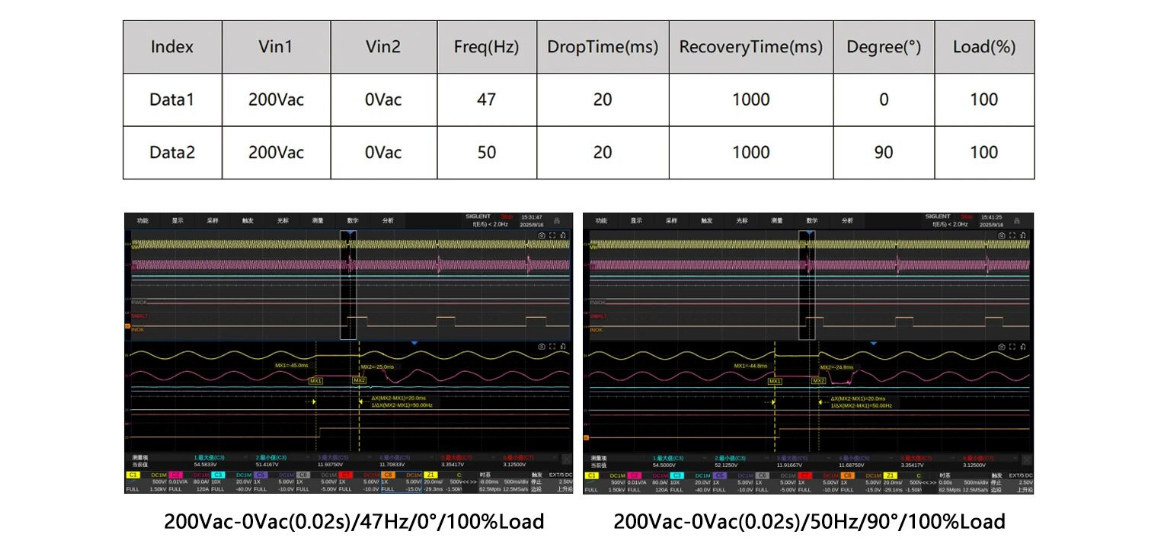
[1] Input power down test
To ensure the reliability of server power supplies in scenarios such as grid fluctuations and unexpected power outages, it is necessary to verify their withstand, protection mechanisms, and output continuity during the "input power interruption-recovery" process. The G6000/G9000 Series Bi-directional Programmable AC Power Supply meets the input power down test requirements with their flexible programmable control for voltage and frequency output.
[2] Measured Current Slope Waveform
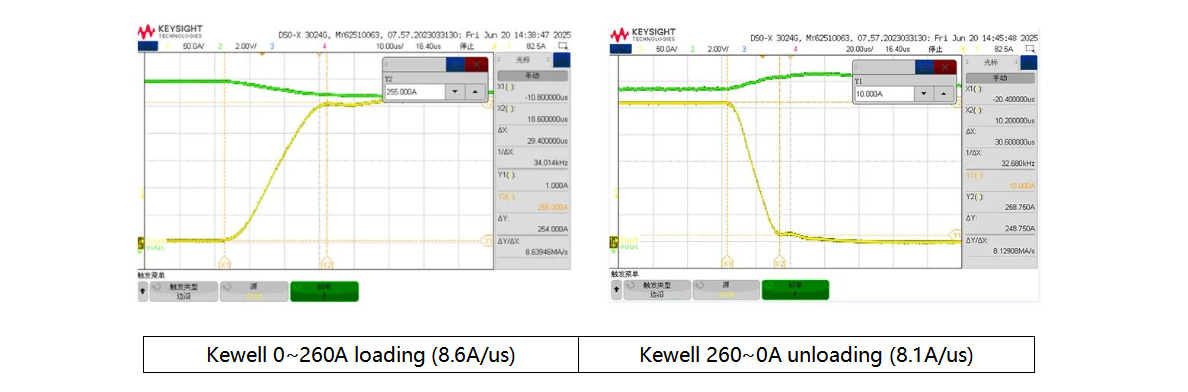
The dynamic response test of server power supplies has stringent requirements for high-speed dynamic loading. According to the standards, the current slope for a single PSU test is ≥ 2.5A/μs. The measured current slope data of the E5100 Series Programmable DC Electronic Load from a customer site is shown in the figure below, and the maximum slope of this series can reach 80A/μs.
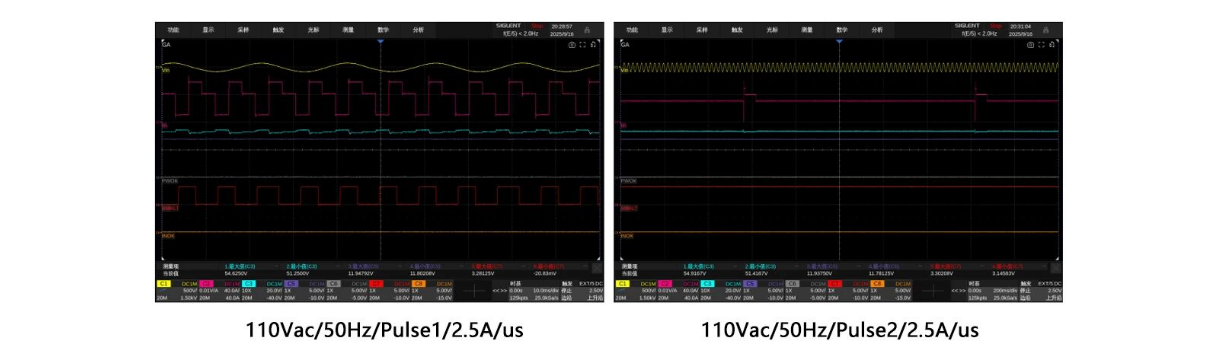
[3] Pulse Load Test
Server power supplies feature a wide variation range and fast variation speed in dynamic loading. The E5100 series covers the requirements of pulse load testing with its high current slope and rich functional modes such as dynamic current, dynamic resistance, and dynamic frequency sweeping.
[4] Measured Waveform of 0V Turn-on Test
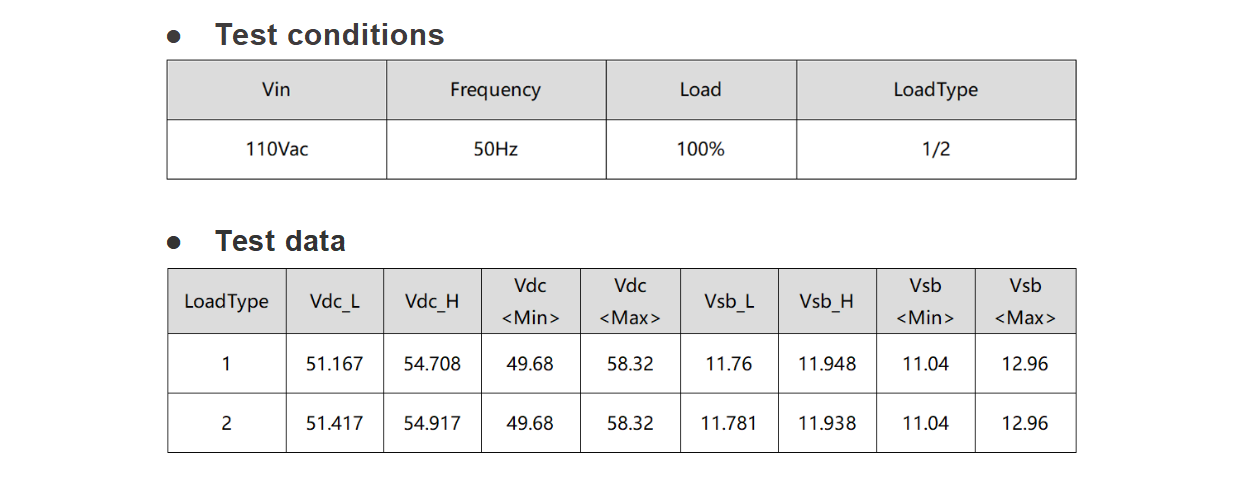
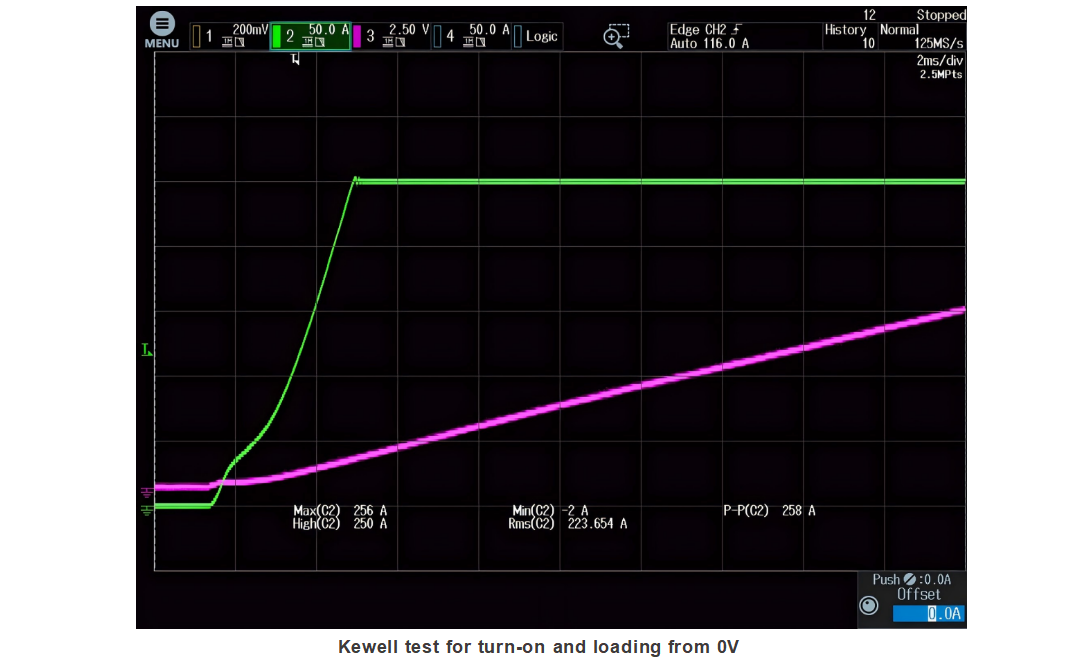
According to the cold start test requirements for server power supplies, server power supplies need to undergo a 0V~51V loading test. The E5100 Series Programmable DC Electronic Load can accurately replicate real load characteristics and meet the requirements of 0V turn-on tests.
05
Conclusion
Kewell's AI Server Power Supply Test Solution directly addresses the testing challenges posed by high computility. With high precision, high dynamic response, and efficient and stable testing capabilities, it meets the testing requirements of PSUs across scenarios. Additionally, it can cover nine major applications including Shelf, Rack, HVDC, and BBU. The solution supports the entire test cycle from R&D to production, featuring ultra-high-speed current response and multi-condition simulation capabilities. It strictly adheres to industry standards, ensures the reliability of AI server power supplies, and helps customers achieve efficient, automated, and highly consistent power supply verification.




 Position: